
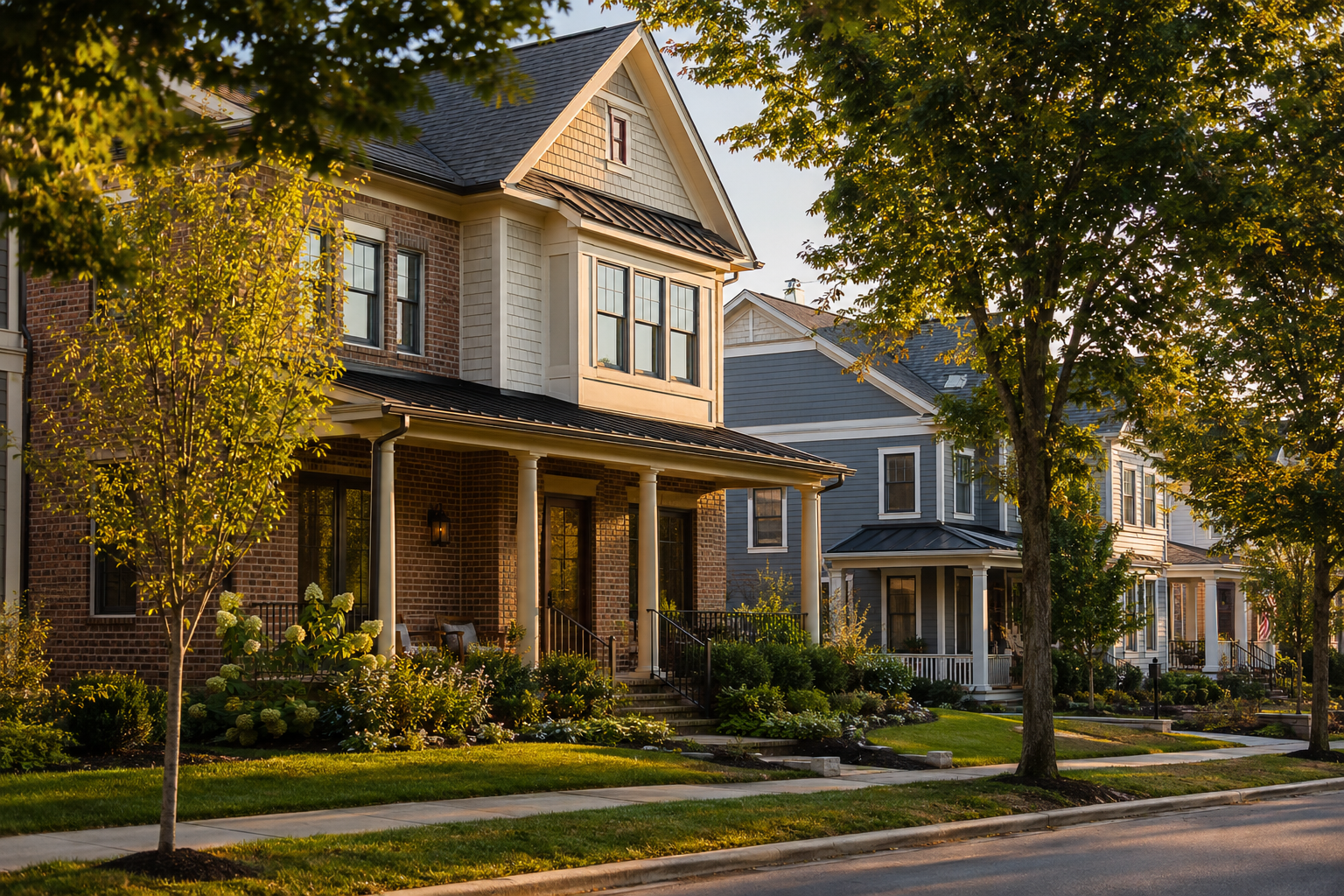
The right community is about more than the house itself. Use these seven practical questions to compare location, layout, costs, builder access, and long-term value before you buy.
Choosing a new home is exciting, but the community around it will shape daily life long after the excitement of move-in day. A strong decision considers the house, the homesite, the neighborhood, and the builder as one complete package. Before comparing countertops or paint colors, step back and ask whether the entire setting supports the way you want to live now and in the years ahead.
1. Start with the location you will use every day. A community can look close to everything on a map while still feeling inconvenient in real life. Consider the routes to work, school, childcare, shopping, recreation, and the people you visit most. Drive those routes at the times you would normally use them. The right location is not simply the one with the shortest mileage—it is the one that makes your regular routine easier.
2. Look beyond the entrance and tour the surrounding area. Pay attention to nearby homes, road conditions, traffic, sidewalks, open space, and how the neighborhood connects to the larger community. Visit during the day and again in the evening if possible. An established setting can offer mature landscaping and a clearer picture of what the area will feel like, while a newer setting may offer amenities and a more uniform streetscape. Neither is automatically better; the goal is to understand what you are actually buying into.
3. Evaluate the homesite as carefully as the floor plan. Lot width, grade, driveway slope, sun exposure, neighboring homes, easements, and usable yard space can all affect how a home lives. A beautiful plan may feel very different on a corner lot, a wooded lot, or a homesite with limited backyard depth. Ask what will be built nearby and whether future phases, roads, or common areas could change the view or traffic pattern.
4. Choose a floor plan for real life, not only for the first tour. Walk through a normal weekday in your mind: coming in with groceries, storing coats and sports equipment, working from home, hosting family, doing laundry, and finding quiet space. Bedroom count and square footage matter, but circulation, storage, natural light, furniture placement, and the relationship between rooms often matter more. The best plan should work today while giving your household room to change.
5. Compare the total cost of ownership. The purchase price is only the starting point. Review property taxes, homeowners association fees, utility expectations, included features, optional upgrades, maintenance responsibilities, and any financing incentives. Ask exactly what is standard in the home you are considering. A lower advertised price can become less attractive if important features are added later, while an efficient new home may provide more predictable maintenance and operating costs during the early years of ownership.
6. Understand who will be available during and after the purchase. Clear communication matters when questions arise about selections, timing, walkthrough items, warranty coverage, or the community itself. Ask who your point of contact will be, how often you will receive updates, what the warranty process looks like, and whether decision-makers are accessible. Working with a locally managed builder can create a more direct path to the people responsible for your home.
7. Think about long-term usefulness and resale appeal. Even if you plan to stay for many years, life can change. A practical layout, convenient location, attractive streetscape, useful parking, and well-considered homesite can make a home easier to live in and easier to sell. Avoid choosing solely around a short-lived trend or one incentive. The strongest purchase is a home and community that will still make sense after the market, your household, and your priorities evolve.
Take your time, ask specific questions, and compare communities using the same checklist. When the location, homesite, floor plan, costs, and builder relationship all work together, you are not simply choosing a new house—you are choosing a place that can support the next chapter of your life.